Short answer: yes, in some cases. BC RAHA normally doesn't rebate work done before BC Housing approves the application, but it makes an exception for emergency adaptations needed before someone is released from hospital. You'll need documentation of the hospital stay and an assessment that supports the need, and you should apply as soon as you can after the work is done.
Why the timing is hard
A typical BC RAHA review takes about 8 weeks. A hospital discharge plan often gives a family days. When the discharge team says the bathroom needs grab bars or a raised toilet seat before a parent can safely come home, waiting for approval isn't realistic. The emergency exception exists for exactly that gap.
How the exception works
- It covers emergency adaptations needed before release from hospital, not general renovations done early.
- You need proof of the hospital stay and an assessment supporting the adaptations. The hospital or home health occupational therapist who plans the discharge is often the right person to document this.
- There is a time limit. BC Housing's pages describe a window of several months between the work and the application (one page says the work must have been installed within six months before the application). Because the wording differs between pages, confirm the timing with BC Housing at 604-433-2218 before you rely on it, and don't wait to apply.
- All the usual rules still apply. Income, assets, status in Canada, home value or rent limits, and the $20,000 lifetime maximum all still count.
What to install first
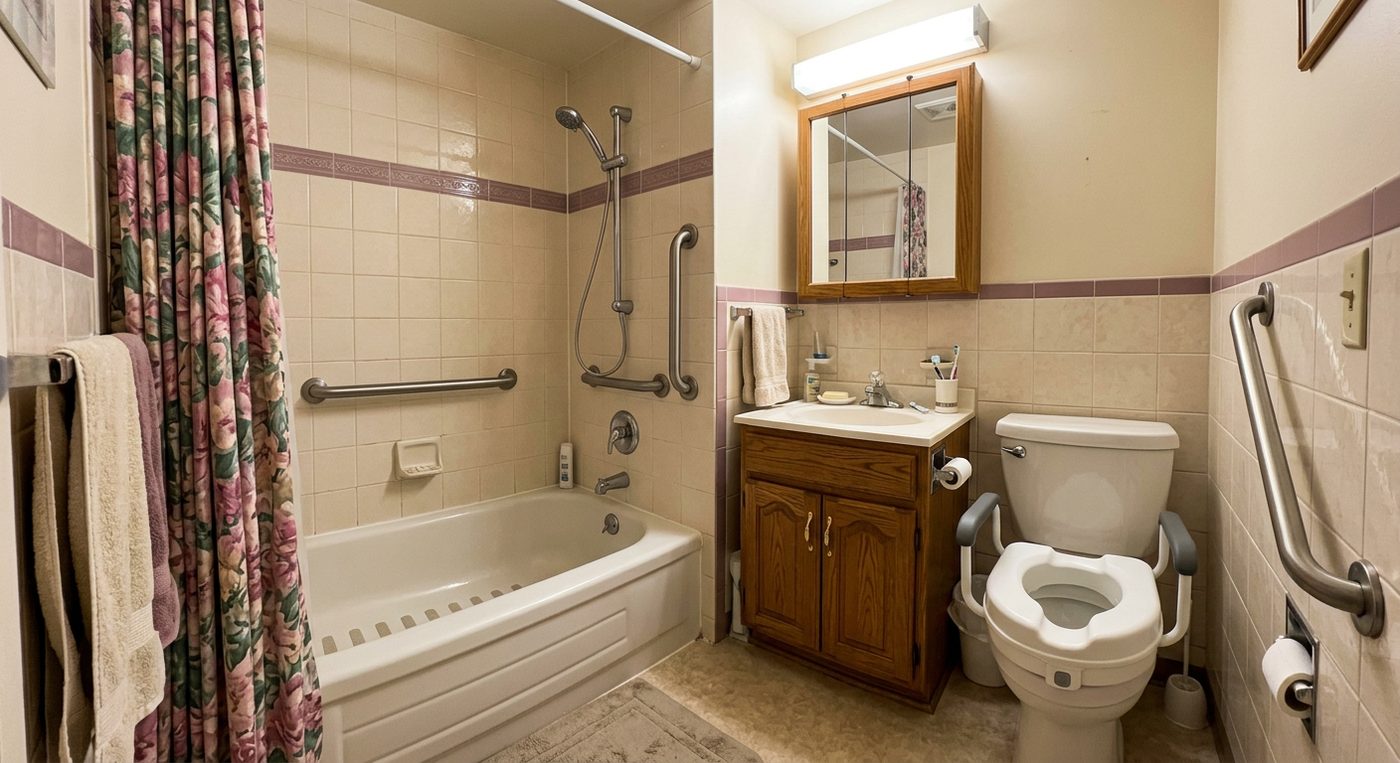
Focus on what the discharge team or OT says the person needs to get through the first days at home safely. In a bathroom that usually means:
- Grab bars at the tub or shower entry, inside the tub or shower, and beside the toilet, anchored into studs or solid blocking. Our guide on where to install grab bars covers placement.
- A raised toilet seat or toilet safety frame, which makes sitting and standing easier after surgery or a fall.
- A shower chair or transfer bench and a handheld shower, so bathing can happen seated.
Bigger changes, like a walk-in shower conversion or a tub cut-out, usually make more sense through the regular application once the immediate need is covered.
Keep these records
- The hospital paperwork showing the admission and discharge dates.
- The OT or medical recommendation for the adaptations you installed.
- An itemized invoice showing each item, materials, labour and taxes.
- Before and after photos of the installed work.
If RAHA doesn't fit
If the household is over the income or asset limits, or the timing doesn't work, federal and BC tax credits for accessibility renovations may still help. See BC RAHA vs tax credits for how they compare.
Frequently asked questions
Will BC RAHA cover work done before approval?
How long after a hospital discharge can I apply for BC RAHA?
What should be installed before a parent comes home from hospital?
Planning bathroom safety changes? Text a photo of the bathroom to (778) 652-2327 or request a free quote below. You can read more on our BC RAHA grant guide, or see how we approach grab bar installation and walk-in shower conversions.
Sources: BC Housing, Homeowner Eligibility and Application; BC Housing, Landlord and Tenant Eligibility. Program details can change, so confirm current figures with BC Housing.